
Lower Back Pain That Comes and Goes: What’s Actually Driving It?
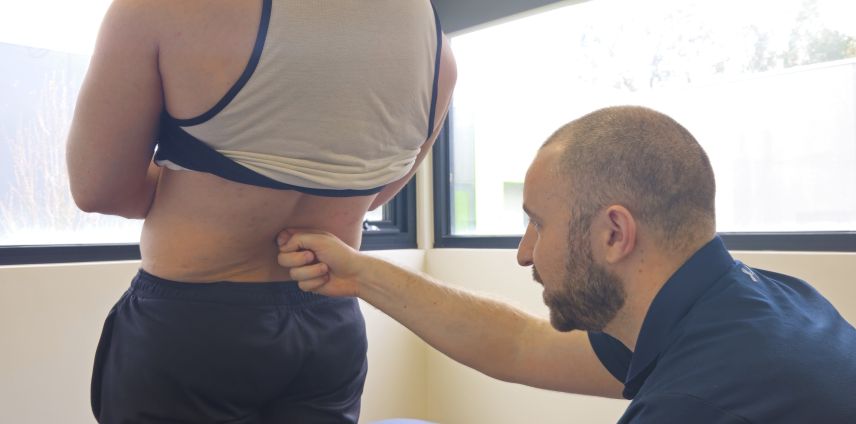
It’s one of the most common patterns we see with lower back pain: it flares up, settles down over a week or two, and then — often with no obvious trigger — it’s back again a month or two later. If this sounds familiar, you’ve probably already tried the obvious things: rest, a bit of stretching, maybe cutting back on whatever you were doing when it last flared. And it probably worked, for a while. The frustrating part isn’t any single episode — it’s the pattern itself, and understanding why it keeps repeating is usually the key to actually breaking it.
Why back pain flares and settles rather than staying constant
Recurring back pain behaves differently to a one-off strain, and that difference matters. A single acute injury — say, an awkward lift — typically follows a fairly predictable healing timeline: pain, then gradual improvement, then resolution. Recurring pain doesn’t follow that pattern because the underlying issue usually isn’t tissue damage that needs to heal — it’s a capacity gap that resets each time the symptoms settle, then gets exposed again the next time load, stress or activity levels tip past what the back can currently manage. The back feels fine between episodes because the trigger (whatever it was) isn’t present, not because the underlying issue has actually been resolved.
Common patterns behind recurring back pain
A few patterns show up again and again in people dealing with back pain that keeps coming back:
- Load spikes without the capacity to match them — a busy week at work, a return to training after time off, or an unusually physical weekend, where demand outpaces what the back is currently conditioned to handle
- Deconditioning between flares — easing off exercise or activity while recovering from one episode, which quietly reduces the capacity needed to handle the next load spike
- Movement avoidance — unconsciously bracing, guarding or avoiding certain positions after a painful episode, which can keep parts of the back underused and under-conditioned long after the pain itself has settled
- General life load — poor sleep, high stress and reduced overall activity don’t cause back pain directly, but they lower the threshold at which everything else tips it into a flare
- An incomplete rehab the first time around — settling down after the pain eased, without addressing the capacity gap that let it happen, so the same vulnerability is still there waiting for the next trigger
Most people recognise at least one of these once it’s pointed out — which is often the first useful step, because it shifts the question from “why did this happen again?” to “what’s the actual gap that keeps getting exposed?
Is recurring pain a sign something’s wrong?
Recurring back pain on its own, without other symptoms, is common and rarely a sign of serious pathology — most of it comes down to the capacity-and-load pattern above rather than ongoing tissue damage. That said, it’s worth getting assessed rather than just riding out another cycle if:
- Each flare is becoming more frequent, more severe, or taking longer to settle than the last
- Pain radiates into a leg, or comes with pins and needles, numbness or weakness
- It’s starting to limit activities it didn’t used to affect
- You’ve never actually had it properly assessed — just managed each flare as it came
If any of those apply, that’s a different conversation to the general pattern described above, and worth a proper look rather than another round of rest and hoping.
What actually helps break the cycle
Because the underlying issue is usually a capacity gap rather than an injury to heal, the things that help look different from what most people try first:
- Building capacity progressively, not just treating the flare — addressing the gap between what the back can currently handle and what you’re asking of it, rather than only managing symptoms each time they show up
- Staying active through and between episodes — complete rest tends to compound the deconditioning that’s part of the problem; the right level of movement, matched to what you can currently tolerate, is usually more useful than avoiding activity altogether
- Identifying your specific triggers — load spikes, movement patterns, or life-load factors look different for everyone, and a plan built around your actual pattern works better than a generic one
- Addressing movement avoidance directly — if guarding or bracing has crept in since an earlier flare, retraining confidence in those movements is often part of actually resolving the pattern, not just the pain
None of this is about finding a single fix that makes back pain disappear forever — it’s about closing the capacity gap that keeps getting exposed, so the next load spike doesn’t tip things over again.
What we look at in assessment
For recurring back pain, the assessment looks beyond whatever’s flaring right now. We look at your history of previous episodes — how often, what seems to trigger them, how long they take to settle — alongside your current movement, strength and overall activity levels, to build a picture of where the actual capacity gap sits. That’s different to assessing a single acute episode in isolation, and it’s the piece that’s often missing when each flare has been managed separately rather than looked at as part of a pattern
Our approach at Adapt Sports Physiotherapy
If back pain keeps coming back for you, we start by understanding the pattern — your history, your triggers, and the gap between what your back can currently handle and what you’re asking of it — rather than just treating whichever flare brought you in. From there we build a plan to close that gap, so the aim isn’t just settling the current episode but reducing how often the next one shows up.
If your back pain is specifically tied to CrossFit or heavy lifting, our guides to lower back pain after deadlifts and CrossFit lower back pain cover that training-specific angle in more detail. And if you’re in Mooroolbark, our guide to back and neck pain for active locals covers the broader picture for that area. We work with people managing recurring back pain from Chirnside Park, Ringwood, Croydon, Mooroolbark and Lilydale, and every plan starts with your actual pattern rather than a generic protocol.
Frequently asked questions
- Does back pain that keeps coming back mean I have a disc problem? Not necessarily. Recurring pain is far more often a capacity-and-load pattern than ongoing disc pathology. Disc-related pain is possible but usually presents with other signs, like pain radiating into a leg — worth assessing rather than assuming either way.
- Should I stop exercising when it flares up? Usually not completely. Some modification during a flare is reasonable, but ongoing deconditioning between episodes is part of what keeps the cycle going. The right level of activity depends on where you’re at.
- Why does it keep coming back even when I feel fine in between? Because feeling fine between flares usually just means the trigger isn’t currently present — not that the underlying capacity gap has been resolved. The gap is still there until it’s specifically addressed.
- Will this ever actually settle long-term? For many people, yes, once the capacity gap behind the pattern is addressed rather than just managing each flare as it comes up — though everyone’s pattern and response is different, which is exactly what an assessment is for.