
Rolled My Ankle Weeks Ago and It Still Feels Unstable — What Now?
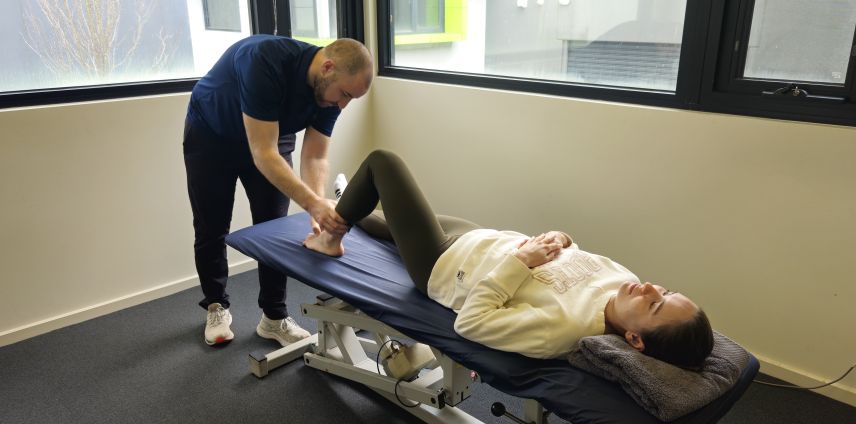
The swelling’s gone down, the bruising’s faded, and the sharp pain has settled — but weeks after rolling your ankle, it still feels wobbly, unreliable, or like it might give way on uneven ground. If that sounds familiar, you’re not imagining it, and it’s not something you just have to live with. It’s a genuinely common pattern, and it has a name: chronic (or subacute, depending on how far out from injury you are) ankle instability — and it usually responds well once it’s properly addressed.
Why it still feels unstable when the injury itself has “healed”
This is the part that trips people up: tissue healing and functional recovery aren’t the same thing. The ligaments on the outside of the ankle can settle down from an inflammation standpoint while the systems that actually keep the ankle feeling stable are still compromised. When you sprain your ankle, you don’t just stretch or tear ligament fibres — you also damage the sensory nerve endings within those ligaments that tell your brain where your ankle is in space. That sense of position, called proprioception, is what gives you the quick, automatic muscle responses that keep your ankle steady on uneven ground. If that system hasn’t been specifically rehabilitated, the ankle can feel “fine” at rest and still feel unreliable the moment it’s challenged.
It’s also worth knowing there are two overlapping but distinct patterns here, though in practice they’re often addressed the same way. Some instability is mechanical — the ligaments themselves are genuinely looser than before, so the joint has more give than it used to. Some is functional — the ligaments have healed reasonably well, but the proprioceptive and muscular control systems haven’t caught up, so the ankle feels unstable even though it’s not actually loose on physical testing. Many people have a combination of both. The distinction matters less for what rehab looks like day to day and more for understanding why “the scan looked fine” or “the physio said the ligament’s healed” doesn’t necessarily match how the ankle feels.
Is this actually common, or is something else going on?
It’s genuinely common — persistent instability after an ankle sprain, rather than a full return to how the ankle felt beforehand, is one of the most frequent outcomes of a sprain that wasn’t fully rehabilitated, not a rare complication. That said, it’s worth getting assessed rather than assuming, particularly if:
- The ankle has actually given way again, rather than just feeling unsteady
- You’ve sprained the same ankle more than once
- There’s ongoing swelling, or pain beyond just the feeling of instability
- It’s limiting what you’re willing to do — avoiding certain surfaces, sports or movements out of caution
If you’re still within the first week or two of the original injury, our guide to ankle sprains covers acute management in more depth — this post picks up from where that one leaves off.
What’s actually driving the instability
A few things commonly contribute to that ongoing unstable feeling:
- Unresolved proprioceptive deficit — the joint-position sense mentioned above, which needs its own specific retraining rather than resolving on its own with time
- Incomplete strength rehabilitation — particularly around the muscles that support the outside of the ankle, which often doesn’t get addressed once pain and swelling have settled
- Returning to activity before confidence and control caught up — going back to sport or regular activity once it stopped hurting, rather than once it was properly rehabilitated
- Repeated minor re-rolls — an ankle that’s already unstable is more prone to further minor episodes, which can compound the problem if each one goes unaddressed
None of this means anything’s permanently wrong with the ankle — it means the parts of rehab that actually prevent long-term instability weren’t completed the first time around, which is addressable regardless of how long ago the original sprain was.
What actually helps
Chronic ankle instability responds well to structured rehabilitation in most cases, even when it’s been going on for a while or followed multiple sprains. The core components are:
- Proprioception and balance training — starting with simple single-leg standing and progressing to unstable surfaces, dynamic movement and sport-specific balance challenges
- Targeted strengthening — particularly the muscles supporting the outside of the ankle, since strength deficits here are common after a sprain
- Progressive return to loaded and sport-specific movement — rebuilding confidence and capacity under the kinds of demands that actually challenge the ankle, rather than stopping rehab once walking feels normal
- Temporary external support during the rebuilding phase — bracing or taping can reduce re-injury risk while the neuromuscular system is being retrained, without being a long-term substitute for rehab
Surgery is occasionally considered for genuinely persistent mechanical instability, but it’s generally reserved for cases where a thorough course of physiotherapy hasn’t produced adequate improvement — for most people dealing with this, structured rehab is the first and most effective step, not a stopgap before surgery.
What we look at in assessment
For ongoing ankle instability, assessment goes beyond checking for swelling or pain. We look at balance and proprioception specifically — how well you can control the ankle on an unstable surface, for instance — alongside strength of the muscles supporting the joint, and your history of previous sprains. That combination usually makes clear whether the main gap is proprioceptive, strength-based, or both, which shapes what the rehab program actually focuses on rather than applying a generic ankle program.
Our approach at Adapt Sports Physiotherapy
If your ankle still feels unstable weeks (or longer) after a sprain, our foot and ankle physio service covers everything from acute sprain management through to chronic instability rehabilitation. We start by identifying what’s actually still unresolved — proprioception, strength, or both — rather than assuming time alone will finish the job.
If you’re earlier in the recovery process, our guide to ankle sprains covers what to do in the first 24-72 hours and the basics of grading and recovery timeframes. We work with people managing ankle injuries from Chirnside Park, Croydon and Ringwood, and every rehab plan is built around what’s actually still missing rather than a generic protocol.
Frequently asked questions
- Is it too late to fix this if it’s been months since my sprain? No. Proprioception and strength deficits can be addressed regardless of how long ago the original injury happened — there’s no expiry date on rehab being useful.
- Should I keep wearing a brace indefinitely? Bracing can help reduce re-injury risk while you’re rebuilding strength and control, but it’s generally meant to support rehab, not replace it long-term. An assessment can help work out what’s appropriate for your situation.
- Does this mean I’ll need surgery eventually? Not usually. Most chronic ankle instability responds well to structured physiotherapy, even after multiple sprains. Surgery is typically only considered after a genuine course of rehab hasn’t produced adequate improvement.
- Why didn’t this get picked up when I first sprained it? It’s common for initial treatment to focus on settling pain and swelling, with proprioception and strength work either not started or not finished once things felt better. It’s a frequent gap, not a sign anything was done wrong.