
Shoulder Pain in Ringwood: Causes, and When to See a Physio
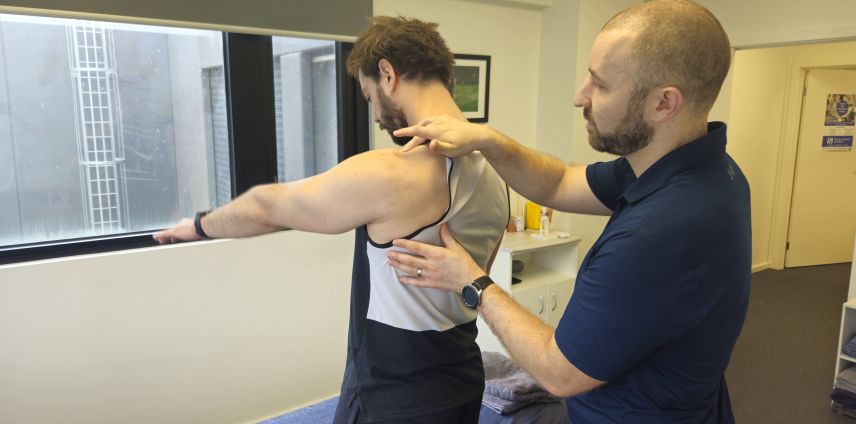
Between footy and netball at the local grounds, the running scene through Ringwood Lake Park, and a steady stream of gym-goers, Ringwood’s active community puts a lot of load through the shoulder — and it’s one of the joints most likely to complain about it. Unlike the hip, the shoulder trades stability for range of motion, relying heavily on the surrounding muscles to keep it working properly under load. If reaching overhead, lying on one side at night, or pressing at the gym has started to feel off, you’re not alone, and it’s usually worth understanding what’s driving it before it settles into a longer-term problem.
Common causes of shoulder pain we see
Shoulder pain rarely has one single cause, and two people with the same symptoms can have quite different things driving them. The presentations we see most often in active Ringwood locals include:
- Rotator cuff irritation — pain on the outer shoulder or upper arm, often with lifting or reaching overhead. See our guide to rotator cuff injuries for more detail.
- Shoulder impingement — a pinching or sharp pain through a specific part of the movement range, common in gym-goers and overhead athletes. More detail in our shoulder impingement guide.
- AC joint injuries — pain and tenderness right at the top of the shoulder, usually from a fall or a direct knock in contact sports like football or netball.
- Training overload — a dull ache that builds after gym sessions, often from a sudden jump in pressing or overhead volume rather than a specific injury or incident.
- Frozen shoulder — progressive stiffness affecting all directions of movement, more common from age 40 onward and usually without a clear injury.
When it’s worth getting it assessed
A shoulder that settles within a few days of rest usually doesn’t need a clinical assessment. It’s worth booking in if:
- Pain has persisted beyond one to two weeks without improvement
- It’s waking you at night or disrupting sleep
- There’s noticeable weakness or difficulty lifting the arm
- It followed a fall, tackle, or other direct impact
- You’re unsure what’s safe to keep training on
Our approach at Adapt Sports Physiotherapy
A proper shoulder assessment looks at more than just where it hurts — it considers training load, movement patterns, and previous injury history to identify what’s actually driving the pain. From there, we build a plan specific to your sport, work demands, and goals, aimed at getting you back to full function rather than just quietening symptoms.
If you’re local to Ringwood and dealing with shoulder pain, our clinic in nearby Chirnside Park is a short drive away. New patients are always welcome, whether you’re managing an old niggle, working around a recent injury, or just want peace of mind before it gets in the way of training.